KaFSA Dialogue Series No.1“U.S. Political Dynamics and Foreign Policy Ahead of the 2026 Midterm Elections”

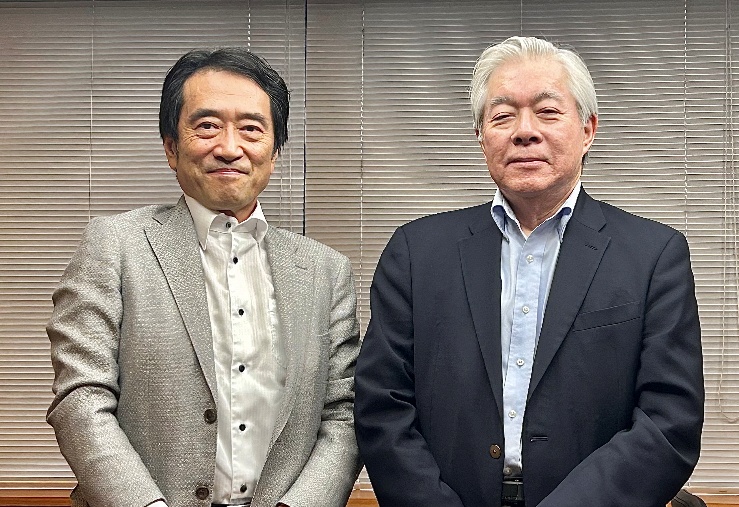
A Conversation with Glen S. Fukushima,
Visiting Fellow, Stanford University; Senior Fellow, Center for American Progress; and Former Deputy Assistant United States Trade Representative for Japan and China
Hosted by Yasuhisa Kawamura, President of KaFSA
1.Fundamentals of Voter Behavior
Kawamura: In Japan, rising prices in the United States are often reported as a major source of public dissatisfaction. As we look ahead to the midterm elections this November, what factors do you think will most strongly shape voter behavior? And how have the priorities among economic issues, political identity, and foreign policy shifted?
Mr. Fukushima: From my discussions with many Democratic lawmakers and officials in Washington, D.C. and Canada in late April and early May, it is clear that the top concern for voters in the 2026 midterm elections is affordability—that is, economic issues. Inflation remains high, and gasoline prices have risen due to the situation in Iran, making the economy the dominant issue. Immigration continues to draw attention, though less than before. Foreign policy is not a direct priority, but the Iran war’s impact on oil and gasoline prices affects daily life and cannot be ignored.
One reason President Trump gained support in the previous election was the expectation that he would improve the economy, but that expectation has not been met. Recent polls show his approval rating at 37–40 percent and his disapproval around 58 percent, a relatively high level.
2.Interpreting President Trump’s Approval Rating
Kawamura: How should we understand President Trump’s declining approval rating? Independents—roughly 30 to 35 percent of the electorate—have reacted strongly to inflation driven by the Hormuz crisis. How might their behavior affect the November midterm elections?
Mr. Fukushima: The U.S. electorate is roughly one-third Democrats, one-third Republicans, and one-third independents, and it is the independents who determine election outcomes. In the last election, many independents supported President Trump because they expected improvements in the economy and stronger border control. But now, dissatisfaction with rising prices—driven by tariffs and higher gasoline costs linked to Iran and the Hormuz Strait—has contributed to his declining approval rating. Many Americans, even some Republicans, are also frustrated that he is devoting significant attention to foreign interventions, such as Venezuela and Iran, despite having promised not to involve the U.S. in “stupid” or “forever” wars.
The outlook for the midterms is complex. Historically, the president’s party tends to lose seats. Democrats performed far better than expected in last November’s elections, raising hopes of a “blue wave” with gains of 30 to 40 House seats. But developments since then—Republican-favored redistricting in Texas and Florida, Democratic-favored redistricting in California, and complicated outcomes in states like Indiana and Virginia—have made the national picture difficult to predict. In Indiana, some Republican members of the state legislature refused to follow Trump’s demand to redistrict to favor Republicans. Although Trump failed in his effort, five of seven Republican legislators who resisted Trump lost in the recent primaries to candidates whom Trump supported. In Virginia, as in California, the voters decided to redistrict to favor Democrats, but the Virginia State Supreme Court reversed this. In addition, the weakening of the 1965 Voting Rights Act by the US Supreme Court has enabled southern states such as Louisiana, Mississippi, and Alabama to adopt gerrymandering practices that dilute Black voting power.
Even so, because President Trump’s popularity has fallen sharply, many observers believe Democrats have better than a 50 percent chance of taking the House. In the Senate, Democrats could regain the majority if they win North Carolina, where they are favored, and three of five competitive states—Maine, Iowa, Ohio, Alaska, and Texas.
If Democrats win the House, they would gain subpoena power, enabling investigations into alleged corruption, and impeachment proceedings could be initiated, though removal from office is unlikely. A Democratic Senate majority could also block presidential nominations. In short, if either chamber shifts to Democratic control, the Trump administration’s ability to advance its agenda would be significantly constrained. At present, with Republican majorities in both chambers and a 6–3 conservative US Supreme Court, the checks and balances among the three branches of government on which Washington is supposed to operate are not functioning effectively.
3. Working-Class Views on Tariffs and Industrial Policy
Kawamura: How are President Trump’s tariffs and industrial policies being evaluated by the working class?
Mr. Fukushima: Public opinion polls show that many working class Americans are dissatisfied with the tariffs. They raise consumer prices and increase costs for U.S. manufacturers that rely on imported components. Although President Trump argues that tariffs punish foreign producers and protect American industry, in practice it is Americans who bear the higher costs. While the inflationary impact has been smaller than some economists predicted, many believe the full effect may appear later.
4. Inflation and Young Voters
Kawamura: Has high inflation changed the voting behavior of young people in metropolitan areas? And are their frustrations directed more at the economy or at the political system?
Mr. Fukushima: Young Americans are deeply dissatisfied with the economy. Tuition has risen sharply, student loan burdens are heavy, and buying a home has become increasingly difficult, leaving many with a sense of insecurity about the future. As a result, support for progressive Democrats—such as Bernie Sanders, Elizabeth Warren, and Alexandria Ocasio Cortez—tends to be strongest among young voters.
Their frustration extends beyond politics to the economic system itself. Many express doubts about capitalism, though what they favor is not traditional socialism but a form of “democratic socialism” in which the government provides stronger safety nets in areas like education and healthcare. One factor behind this dissatisfaction is the widening gap between those who own stocks and those who do not. Rising prices hit young people without assets particularly hard, reinforcing their sense that the current system is not working for them.
5. The Current State of MAGA
Kawamura: How do you assess the current state of the MAGA movement?
Mr. Fukushima: There is growing dissatisfaction and even defection within MAGA, largely driven by foreign policy. Although the Epstein Files caused some supporters to break with President Trump in the past, the main source of tension today is his deep involvement in foreign policy—Israel–Hamas, Venezuela, and Iran. For many MAGA supporters, “America First” means focusing on domestic issues, so foreign entanglements generate criticism and even defection.
How far this fragmentation goes will depend on developments in foreign policy, with Iran being the most significant issue at present. There are also signs that President Trump is considering action toward Cuba, with Secretary of State Marco Rubio reportedly engaging directly with Raul Castro’s grandson. These foreign policy moves are accelerating fragmentation within MAGA. Independents and swing voters are also increasingly skeptical of U.S. involvement in the Middle East and Latin America, and many are highly dissatisfied by how much time President Trump is devoting to overseas issues.
6. Democratic Party Strategy for the 2028 Presidential Election
Kawamura: How is the Democratic Party preparing for the 2028 presidential election?
Mr. Fukushima: Serious movement will begin after this year’s midterm elections, but more than ten candidates are expected to consider running. Had President Biden announced by early 2024 that he would step down after one term, five popular governors—Newsom, Whitmer, Pritzker, Shapiro, and Beshear—along with Klobuchar, Booker, Buttigieg, Castro, and Harris would likely have entered the race. For 2028, nine of these ten (all except Klobuchar, who is running to be governor of Minnesota) are still seen as likely candidates, and additional names such as Moore, Polis, Murphy, and even Emanuel are being mentioned.
However, early polling is unreliable. In 2020, President Biden struggled in the first three primaries and only gained momentum after winning South Carolina with strong support from Black voters. Moderates then consolidated behind him to prevent the nomination of Sanders, who had won the California primary, since many Democrats were afraid that a Sanders-Trump battle would have led to Trump’s re-election. This history shows how unpredictable the 2028 race will be.
If the economy is weak in 2028 and President Trump’s popularity is low, voters may seek someone fundamentally different from him. Governor Gavin Newsom fits that profile, though some Democrats worry he may be “too Californian” or “too progressive” to win in the Midwest or South. In that case, Governor Andy Beshear of Kentucky could be a strong alternative. I recently met with him; he is a moderate, pragmatic governor who has twice won the governorship in a conservative state and emphasizes the importance of “faith” in ethical terms.
Kawamura: Does Governor Beshear have extensive experience and familiarity with Japan?
Mr. Fukushima: Governors generally do not focus on foreign affairs, but Beshear understands Japan’s economic importance because the largest Toyota plant in the United States is in Kentucky. He knows Toyota’s leadership well and appreciates the value of Japanese trade and investment. The same is true for Governors Newsom and Whitmer, who also lead states with significant Japanese trade and investment.
7. Assessment of the U.S.–China Summit
Kawamura: How has the recent U.S.–China summit been evaluated in the United States?
Mr. Fukushima: Many Americans were disappointed. President Trump hoped to secure short term commercial deals—such as large purchases of soybeans and Boeing aircraft—to showcase results ahead of the midterms, but the actual outcomes were limited. President Xi prioritized long term strategic interests, including Taiwan, and observers watched closely to see how much President Trump might concede on Taiwan in exchange for short-term commercial gains. Although China agreed to purchase 200 Boeing aircraft, concerns remain that the administration may delay, reduce, or cancel arms sales to Taiwan. Overall, most view the summit as having produced no major achievements, though President Trump appears to be aiming for bigger results during Xi’s visit to Washington on September 24. The key question is what he might concede to China in return.
Kawamura: Has the U.S.–China relationship entered a phase of the so-called “managed competition”?
Mr. Fukushima: “Managed competition” is a term championed by Biden’s NSC Director Jake Sullivan and described what the Biden administration was trying to achieve with China. But President Trump does not see the relationship that way. He views China primarily as a transactional partner—a market that can buy American products—and pays little attention to strategic issues including human rights, China–Russia cooperation, or Taiwan. His comment that “Taiwan stole our semiconductor industry” reveals his limited understanding of the industry or of the complex history of US-China-Taiwan relations.
Kawamura: China is rapidly advancing in AI, semiconductors, and space. The U.S. response now seems less strategic than during Trump’s first term, which has risen our concern.
Mr. Fukushima: I agree. Congress—both Democrats and Republicans—shares a consensus that China is America’s long term strategic competitor. But the Trump administration’s approach toward China has weakened considerably compared to the first term. Earlier, he had advisers like Bolton, McMaster, Mattis, Kelly, and Pottinger who considered China a geo-political rival of the U.S. There are few such advisers in the current administration, and policy responses, including tariffs, are ad hoc, reactive, and incoherent rather than part of a systematic, coherent, long term strategy.
Kawamura: How is the administration’s Taiwan policy perceived in the U.S.?
Mr. Fukushima: Congress, the State Department, and the Defense Department all agree that defending Taiwan is essential to U.S. interests and credibility. President Biden publicly stated four times that the U.S. would defend Taiwan against China, though the White House clarified each time that his statement did not represent a change in America’s China policy. President Trump, by contrast, has repeatedly refused to give a clear answer when asked the question and has shown ignorance of or disregard for past commitments, such as dismissing the 1982 U.S.–China agreements as “a long time ago.” This is a source of serious concern, as is his tendency to give higher priority to short-term economic gains—or “deals”—to long-term strategic goals.
8. Steadfast Commitment to the U.S.–Japan Alliance
Kawamura: Finally, regarding the U.S.–Japan alliance, last year you noted that the American national security community maintained a strong consensus that the alliance remained the core of the Indo Pacific strategy, regardless of occasional statements by the President. Is it reasonable to assume that there has been no change in the consensus within the US national security community?
Mr. Fukushima: That consensus has not changed. Congress, the State Department, the Defense Department, and the broader national security community continue to regard Japan as the United States’ most important and reliable ally in Asia. They fully expect the U.S. to act under the security treaty to defend Japan if necessary.
The only uncertainty is the president’s own statements, which are difficult to predict and tend to change depending on whom he has spoken with most recently or what he has seen on television or social media. But the underlying strategic consensus—that the U.S.–Japan alliance is central to American policy in the Indo Pacific—remains firm. I do not see any significant change in that regard.